
Foursquare Cathedral: Andrew Garland and Jean Anderson in Recital
Please see the events listing for upcoming events.
Boston Conservatory at Berklee presents a recital featuring American baritone Andrew Garland.
Program Information
Repertoire
RALPH VAUGHAN WILLIAMS (1872–1958): Songs of Travel
Texts by Robert Louis Stevenson
1. The Vagabond
7. Whither Must I Wander
8. Bright Is the Ring of Words
STEVEN MARK KOHN (b.1957): “The War Prayer”
Text adapted from an essay by Mark Twain
KURT ERICKSON: Here, Bullet
Texts by Brian Turner
1. Here, Bullet
2. Eulogy
3. A Soldier’s Arabic
4. Curfew
—INTERMISSION—
GABRIELA FRANK (b.1972): From Cantos de Cifar y el mar dulce
Texts by Pablo Antonio Cuadra
I. El Nacimiento de Cifar
XVIII. Primer Parte: El Rebelde
XVIII. Segund Parte: Tomasito, el Cuque
XVIII. Tercer Parte: El Niño
LEE HOIBY (1926–2011): “Last Letter Home”
Text by PFC Jesse Givens
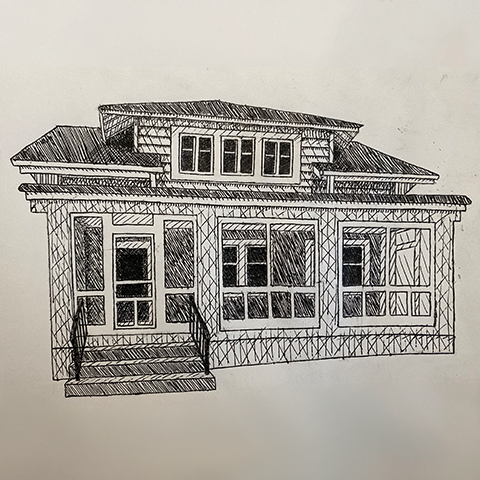
MATT BOEHLER (b.1976): Foursquare Cathedral
Text by Todd Boss
1. Ruin
2. My House Is Small and Almost
3. The Wallpaper
4. What Yesterday Appeared a Scar
5. Another Hand
Welcome
Founded in 1867, Boston Conservatory has stood as a bold experiment in access and artistry for more than 150 years—it was among the first schools in the US to admit women and people of color, the first to establish an opera program, and the first to offer a degree in musical theater. That spirit of innovation, inclusion, and excellence continues to guide us today.
In the Vocal Arts Department—home to the nation’s oldest opera training program—our community of singers, conductors, and educators pursues music with courage and purpose. Across 15 degree paths in vocal performance, opera, pedagogy, and choral arts, our students blend tradition with imagination, exploring both the classical canon and the boundary-pushing work of living composers.
The results of that exploration are profound. This past year alone, more than 10 of our students and alumni were named winners in the Metropolitan Opera Laffont Competition, alongside numerous other national and international accolades. Our vocal pedagogy graduates now enjoy a 100-percent job placement rate, leading programs in schools, studios, and universities across the globe. Others are performing, conducting, producing, researching, and innovating within and beyond the arts—each carrying Boston Conservatory’s values into the world.
This season’s calendar reflects the brilliance and vitality of this community. From our Opera Innovators Series featuring Riccardo Frizza, Karen Slack, Brenda Rae, and Anne Bogart, to our collaborations with luminaries such as Ricky Ian Gordon and Andrew Garland, to our choral programming and fully staged opera productions, every performance you attend is the culmination of countless hours of dedication, discovery, and collaboration. As you take in tonight’s program, I invite you to reflect on the impact that music and storytelling have on our shared humanity.
If you find yourself moved by what you hear this afternoon and wish to be part of our journey, I warmly invite you to reach out—either to our offices or to me personally. We would be delighted to connect with you, to share our vision, and to explore how your partnership can help us continue shaping the future of vocal artistry.
Thank you for your presence, your applause, and your belief in what we do.
With gratitude and excitement,
Dr. Isai Jess Muñoz
Chair, Vocal Arts Department
Program Notes
On my bucket list is to sing every solo vocal work of Ralph Vaughan Williams. As of now, I am approaching the halfway point.
I came to this cycle, Songs of Travel, relatively late at the age of 35 (while most 18-year-old beginners had already sung “The Vagabond,” and maybe some.) I first programmed the complete Songs of Travel for a Carnegie Neighborhood concert with Warren Jones. My hometown musical friends gave me lots of opportunities to sing my favorite [early] twentieth-century English composer. Steven Karidoyanes and the Masterworks Chorale engaged me to sing Dona Nobis Pacem, Five Mystical Songs, and the rare Epithalamion. The Boston POPS gave me a 15-show run of Fantasia on Christmas Carols (and my old friend Steven conducted one of those.) Keith Lockhart had me at Brevard for A Sea Symphony. I sang “Linden Lea” at Silver Lake Regional High School (thanks again, Mr. Glass!) I am sure I sang The Turtle Dove at UMass, but even if I didn’t, I learned that work and many more in my time there.
What is it about Vaughan Williams that we love so much? Honestly, for me it is association. “The Call” is one of the hymns in my church hymnal. I was singing this with my choir and congregation long before I knew who Vaughan Williams was or what an art song was. But there must be something more to “uncle Ralph” (as Andover native and fellow Vaughan Williams devotee Marcus Deloach calls him). It can’t be just that I heard and sang his songs at a formative time and place in my life. (With all due respect, I don’t have the same undying devotion to Sherri Porterfield or Kirby Shaw.) What is it about his music in particular? It is always carefully crafted. (He studied with Maurice Ravel who was very strict and said of the young composer, “He was the only pupil who did not write my music.”) And at the same time, it honors and is heavily influenced by folk song. All of the above pieces (and some more on my bucket list) are choral works. Vaughan Williams was also a choir director and very interested in community and bringing people together. Vaughan Williams was an atheist, and yet he wrote some of the most uplifting sacred music of all the ages. He even arranged and edited the entire English Hymnal. When asked about why he wrote so much music for the church, he answered, “If they’re going to be there, they might as well have something good to listen to.” Since you all are here, I say you ought to have something good to listen to as well.
The remainder of the program notes are written mostly by the composers themselves. I do have a close personal connection with all of them, and I am grateful and excited for the opportunity to share some of their songs with you today.
If you have not already, I invite you to look at the texts for Cifar (Frank) and Foursquare Cathedral (Boehler) during intermission.
—Andrew Garland
About “The War Prayer”
Mark Twain wrote “The War Prayer” in 1904–05 to protest America’s involvement in the Spanish-American War. His family convinced him to keep it from publication, fearing it was too controversial. It was published after his death. Twain made the case that if God causes all things to happen and blesses select people, then He must also, willingly, deny others his blessing. It is the other side of prayer, the unspoken side, which Twain so brilliantly characterized in “The War Prayer.” It is not my goal to demean anyone’s faith or enter into a theological debate. I see Twain’s essay not as an indictment of religion, but as an impassioned anti-war statement, the kind of which will always have resonance. Those familiar with this work will recognize the astonishing liberties taken in adapting it. Whole passages were cut, phrases were moved around and words were deleted or replaced with my own, all in the interest of concision, storytelling and the considerations one makes when fitting words to music. But the essence of Twain’s tone and message has not been altered.
—Steven Mark Kohn, 2013
About Here, Bullet
In 2004, renowned poet/author Brian Turner returned from a tour of duty in the Iraq War and penned his firsthand poetic descriptions in a book that has become an instant classic of its genre. In 2018, I took four of the poems and fashioned them into an 18-minute song set written for 30 baritones during the COVID-shortened 2019–2020 season.
The work traces a narrative arc that takes us from a place of trauma to a state of wonder and acceptance.
Here, Bullet won first prize in the 2020 NATS Art Song Composition Competition, received performances throughout North America, features in print and online media, podcasts interviews, performed at 9/11 commemorative ceremonies, performed on master’s and doctorate recitals, and served as the subject of a recently published doctoral dissertation titled A Performance Guide to Kurt Erickson’s Here, Bullet. Recent international performances have taken place at Deutsche Oper Berlin (baritone Thomas Lehman and pianist John Parr) and at Scotland’s St. Andrews University.
Here, Bullet is currently being made into a short film by Tony-nominated actor/director Will Chase. The soundtrack was recently recorded at New York’s Power Station in a version created for the Sybarite5 string ensemble—shooting will begin spring 2025.
Perhaps most satisfying, the Here, Bullet creative team will work alongside clinicians and mental health professionals, using the work in three-month arts therapy programs as a vehicle for helping veterans struggling with PTSD and trauma. Partner organizations include San Francisco VA Medical Center, Concord Vet Center, and Solano Vet Center Outstation.
Here, Bullet addresses important social issues that affect us all: PTSD, gun violence, and amplifying the voice of the veteran experience. The songs find moments of beauty and vulnerability in the midst of the chaos of armed conflict. Our hope is that singers of all voice types and experiences will perform the work and find ways to engage in these often difficult but necessary conversations.
—Kurt Erickson
About Songs of Cifar and the Sweet Sea
Songs of Cifar and the Sweet Sea is a work in progress, and its first version is projected to be an evening-length song cycle for baritone, soprano, and piano.
Under the sponsorship of the Marilyn Horne Foundation, two new songs were penned for a premiere in Carnegie Hall in January of 2007 by the baritone-piano team of Andrew Garland and Donna Loewy. While the songs are created to flow as a narrative set, certain songs can be performed as stand-alones or with a select number of others from the cycle. … While my own experience accompanying singers tells me that the piano is an admirable partner-in-crime, I would like to create another version scoring the piano for full orchestra.
Songs of Cifar and the Sweet Sea draws on poetry by the Nicaraguan poet Pablo Antonio Cuadra (1912–2002). As a young man, Cuadra spent more than two decades sailing the waters of Lake Nicaragua, meeting peasants, fisherman, sailors, woodcutters, and timber merchants in his travels. From such encounters, he was inspired to construct a cycle of poems that recount the odyssey of a harp-playing mariner, Cifar, who likewise travels the waters of Lake Nicaragua. In my initial reading of the poems, I was struck by how Cuadra writes of commonplace objects and people but ties them to the undercurrents of his country’s past of indigenous folklore. Despite Cuadra’s plain vocabulary, ordinary things are thus rendered mythical, revealing Cifar’s capacity for wonder and passionate lyricism. The poems, which begin with Cifar’s birth and end with his death as an old man, still clinging to an oar some forty-odd poems later, are rich material for a composer’s imagination, indeed.
With this treasure trove of poetry to spark my imagination, I initially chose to compose music for baritone and piano only, limiting myself to a chosen selection of poems. (The poems are carefully cobbled together without changing the Cuadra’s cadence or phrasing so that more than one poem may be featured in any given song.) After my initial foray in this project, I soon decided to embark on setting the entire collection, making for a full evening-length program. … Hence, the first version of this song cycle is projected to come to life in the tradition of the great lieder by composers like Schumann and Schubert—in an intimate performance setting of just solo singers and collaborating pianist.
As a work in progress, approximately eight songs for baritone and piano have been composed so far, totaling approximately thirty minutes.
I. El Nacimiento de Cifar (The Birth of Cifar): In this first song, we are introduced to our protagonist at the time of his birth. Already, hints of blood, danger, and a supernatural presence in his life are evident. The explosive vocal release at the ends of short phrases is typical of Miskito Indian music of Nicaragua. The quick repeated notes in the piano harmonizing the vocal line emulate Nicaraguan marimba performance practices.
XVIII. Primer Parte: El Rebelde (Part One; The Rebel): In this mysterious song, a scene is coolly described of preparation being made for rebellion. We do not know if Cifar is a willing participant or not.
XVIII. Segund Parte: Tomasito, el cuque (Part Two: Tomasito, the Cook): A scene is described of a ship’s cook being tortured. Chillingly, it is not clear what Cifar’s role is.
XVIII. Tercer Parte: El Niño (Part Three: The Child): Cast in the solo style of “velorio” funeral singing from Latin American cultures, the vocal writing emphasizes a rise and fall of line, and grace note-inflected tenuto pulsations to mimic the sound of sobs. Cifar cries for the child that used to be him, for a lost innocence.
—Gabriela Frank
About Last Letter Home
Private First Class Jesse Givens of Springfield, Missouri, was killed in Iraq on May 1, 2003, when the riverbank on which his tank was parked gave way, drowning him in the Euphrates River. Two weeks earlier, he had written a letter to his pregnant wife Melissa, his six-year-old stepson Dakota (nicknamed “Toad”), and his unborn son, with instructions that it be opened only in the event of his death. The letter arrived a month after his funeral, and was delivered to his wife in the maternity ward where she had just given birth to the child he never saw.
Composer Lee Hoiby read the letter after it was published in the New York Times. “I thought right away of this soldier sitting in his barracks at night, probably chewing a pencil, and trying to find words for such a message. It was a very intimate letter. The kind of a letter that you would never expect to read from a husband to his wife. That’s what lends it further power.”
—Yoshi Campbell
About Foursquare Cathedral
Foursquare Cathedral is a setting of five poems from poet Todd Boss’s critically lauded debut volume, Yellowrocket. The cycle was commissioned by Arthur Jacobson and Peninah Petruck for bass-baritone Benjamin de la Fuente and pianist Jocelyn Dueck. It premiered on March 6, 2016 as part of the Hot Air Music Festival at the San Francisco Conservatory of Music, with the composer singing, and Kevin Korth at the piano. The cycle was shortly thereafter chosen as winner of the 2017 National Association of Teachers of Singing (NATS) Art Song Composition Competition, and it is now published by E. C. Schirmer.
—Matt Boehler
“This song cycle is absolutely brilliant, from the first note to the last. The composer brought the words to life through inventive word settings, intriguing harmonies, an interesting and varied accompaniment which contributed to the understanding of the text, an engaging dramatic sense, and a wonderful choice of poems.”
—Lori Laitman
Texts and Translations
Text by Robert Louis Stevenson
1. The Vagabond
Give to me the life I love,
Let the lave go by me,
Give the jolly heaven above,
And the byway nigh me.
Bed in the bush with stars to see,
Bread I dip in the river—
There’s the life for a man like me,
There’s the life for ever.
Let the blow fall soon or late,
Let what will be o’er me;
Give the face of earth around,
And the road before me.
Wealth I seek not, hope nor love,
Nor a friend to know me;
All I seek, the heaven above,
And the road below me.
Or let autumn fall on me
Where afield I linger,
Silencing the bird on tree,
Biting the blue finger.
White as meal the frosty field—
Warm the fireside haven—
Not to autumn will I yield,
Not to winter even!
7. Whither Must I Wander
Home no more home to me, whither must I wander?
Hunger my driver, I go where I must.
Cold blows the winter wind over hill and heather:
Thick drives the rain and my roof is in the dust.
Loved of wise men was the shade of my roof-tree,
The true word of welcome was spoken in the door—
Dear days of old with the faces in the firelight,
Kind folks of old, you come again no more.
Home was home then, my dear, full of kindly faces,
Home was home then, my dear, happy for the child.
Fire and the windows bright glittered on the moorland;
Song, tuneful song, built a palace in the wild.
Now when day dawns on the brow of the moorland,
Lone stands the house, and the chimney-stone is cold.
Lone let it stand, now the friends are all departed,
The kind hearts, the true hearts, that loved the place of old.
Spring shall come, come again, calling up the moorfowl,
Spring shall bring the sun and rain, bring the bees and flowers;
Red shall the heather bloom over hill and valley,
Soft flow the stream through the even-flowing hours.
Fair the day shine as it shone on my childhood—
Fair shine the day on the house with open door;
Birds come and cry there and twitter in the chimney—
But I go for ever and come again no more.
8. Bright Is the Ring of Words
Bright is the ring of words
When the right man rings them,
Fair the fall of songs
When the singer sings them,Still they are carolled and said—
On wings they are carried—
After the singer is dead
And the maker buried.
Low as the singer lies
In the field of heather,
Songs of his fashion bring
The swains together.
And when the west is red
With the sunset embers,
The lover lingers and sings
And the maid remembers.
STEVEN MARK KOHN (b.1957): “The War Prayer”
Text adapted from an essay by Mark Twain
It was a time of great excitement! The country was up in arms and every
breast burned with the holy fire of patriotism!
Drums were beating, bands were playing, and all down the street as far as the
eye could see, a fluttering of flags flashed in the sun!
Every day the young volunteers marched down the wide avenue, gay and fine
in their new uniforms!
The proud mothers and proud fathers, proud sisters and sweethearts,
cheering them with voices choked with happy emotion as they swung by!
Every night the packed meeting houses echoed with the sound of patriotic oratory,
which stirred them deep in their hearts, and was greeted with waves of applause,
bringing tears to their eager shining eyes! It was a grand and glorious time!
Sunday morning came. The church was filled.
The minister delivered a prayer, such as none had ever heard before.
He beseeched the ever-merciful loving Father of us all to watch over our noble soldiers and aid,
comfort and encourage them in their just and righteous cause.
Bless them and shield them in the day of battle and hour of peril!
Bear them in his mighty hand! Make them invincible! Grant honor and glory to their country and flag!
Amen
A reverent pause came over the whole congregation.
In the silence, a strange old man entered, and with slow and noiseless step, moved up the aisle.
Taking his place at the altar, he turned and spoke to the congregation.
“I come as a messenger from the throne of God. HE has heard your prayer and is prepared to grant it.
But HE wants you to know your prayer has two parts. We have heard the first part, as uttered by your servant in this hall.
I shall now tell you what you have silently asked for.”
“Oh, Lord, our Father, Our brave young men go forth to battle. Be with them, Lord.
Be thou with them, as they stray from the sweet peace of our beloved firesides.
Help us, Lord, to drown the thunder of their guns with the shrieks of their wounded.
Help us cover their smiling fields with the pale forms of their dead.
Help us lay waste to their homes. Help us wring the hearts of their grieving widows!
Turn out their orphaned children to wander the wastes of their ruined land in rags and hunger and pain!
May they be broken in spirit, imploring Thee for mercy and denied it!
Blight them! Help us destroy them! We ask Thee, in the name of love!
Ye have prayed it. HE has heard you. If ye still desire it, speak. HE is waiting…“
KURT ERICKSON: Here, Bullet
Texts by Brian Turner
1. Here, Bullet
Here, bullet
If a body is what you want
then here is bone and gristle and flesh.
Here is the clavicle-snapped wish,
the aorta’s opened valves, the leap
thought makes at the synaptic gap.
Here is the adrenaline rush you crave,
that inexorable flight, that insane puncture
into heat and blood. And I dare you to finish
what you’ve started. Because here, Bullet,
here is where the world ends every time.
2. Eulogy
It happens on a Monday, at 11:20 A.M.,
as tower guards eat sandwiches
and seagulls drift on by the Tigris River.
Prisoners tilt their heads to the west
though burlap sacks and duct tape blind them.
The sound reverberates down concertina coils
the way piano wire thrums when given slack.
And it happens like this, on a blue day of sun,
when Private Miller pulls the trigger
to take brass and fire into his mouth:
the sound lifts the birds up off the water,
a mongoose pauses under the orange trees,
and nothing can stop it now, no matter what
blur of motion surrounds him, no matter what voices
crackle over the radio in static confusion,
because if only for this moment the earth is stilled,
and Private Miller has found what low hush there is
down in the eucalyptus shade, there by the river.
—PFC B. Miller (1980 – March 22, 2004)
3. A Soldier’s Arabic
The word for love, habib, is written from right
to left, starting where we would end itand ending where we might begin.
Where we would end a war
another might take as a beginning,
or as an echo of history, recited again.
Speak the word for death, maut,
and you will hear the cursives of the wind
driven into the veil of the unknown.
This is a language made of blood.
It is made of sand, and time.
To be spoken, it must be earned.
4. Curfew
At dusk, bats fly out by the hundreds.
Water snakes glide in the ponding basins
behind the rubbled palaces. The mosques
call their faithful in, welcoming
the moonlight as prayer.
Today, policemen sunbathed on traffic islands
and children helped their mothers
string clothes to the line, a slight breeze
filling them with heat.
There were no bombs, no panic in the streets.
Sgt. Gutierrez didn’t comfort an injured man
who cupped pieces of his friend’s brain
in his hands; instead, today,
white birds rose from the Tigris.
GABRIELA FRANK (b.1972): From Cantos de Cifar y el mar dulce
Texts by Pablo Antonio Cuadra
I. El Nacimiento de Cifar
Hay una isla en el playón pequeña
There is an island in the shallows small
como la mano de un dios indígena.
as the hand of an indigenous god.
Ofrece frutas rojas
It offers red fruit
a los pájaros
to the birds
y al náufrago
and, to the shipwrecked,
la dulce sombra de un árbol.
the sweet shade of a tree.
Allí nació Cifar, el navegante
There, Cifar the sailor was born
cuando a su madre se le llegó su fecha,
as his mother’s time came
solitaria remando a Zapatera.
while she was rowing, alone, to Zapatera.
Metió el bote en el remanso
She steered the boat into a pool
mientras giraban en las aguas
While they spun in the waters,
tiburones y sábados
sharks and shad
atraídos por la sangre.
attracted to the blood.
Los dedos en el arpa
Fingers on the harp,
y ya empieza
and at once begins
el mal de lontananza.
a longing sickness for the faraway.
Cifar
Cifar,
calla tu canto.
quiet your song.
Cifar
Cifar,
no recubras
do not cover
de música tu oído:
your ears with music:
Ese ilimitado
That infinite
Azul
Blue
te llama.
calls you.
XVIII. Primer parte: El Rebelde (First part: The Rebel)
Todavía al aurora
Dawn has still not
no despierta el corazón
awakened the heart
de los pájaros y ya Cifar
of the birds, and already Cifar
tira la red en el agua oscura.
casts his net into the dark.
Sabe que es la hora
He knows it is the hour
de la sirena y no teme
of the siren, and he is not afraid
el silencio.
of the silence.
Cifar espera
Cifar waits
la señal en las lejanas
for a signal from the faraway
serranías. Antes del alba
mountains. Before daybreak
encenderán sus fogatas los rebeldes.
the rebels will fire up their bonfires.
Les lleva peces
He takes them fish
y armas.
and weapons.
XVIII. Segund part: Tomasito, el cuque (Second part: Thomas, the cook)
“¿En qué lancha las llevaron?
“What boat did they carry them in?
¡Contesta, Tomás, contesta!
Answer, Tomás, answer!
¿Desde cuál isla zarparon?
“From which island did they sail?
¡Jodido, Tomás, contesta!
Damn it, Tomás, answer!
“¿A quiénes las entregaron?
“Who did they deliver them to?
¡Hijo de puta, Tomás!
Son of a whore, Tomás!
¿Quiénes llevaron las armas?
“Who carried the weapons?
¡Cabrón, contesta, Tomás!
You bastard, answer, Tomás!
Pero no habla Tomás.
But Tomás won’t talk.
¡Qué huevos de hombre. No habla!
What balls on this guy! He doesn’t talk!
¡Ya nunca hablará Tomás!
Now Tomás will never talk again!
XVIII. Tercer parte: El Niño (Third part: The Child)
El niño que yo fui
The child I was
no ha muerto
has not died
Queda
he remains
en el pecho
in my breast
toma el corazón
taking my heart
como suyo
as his own
y navega dentro
and sails inside me
lo oigo cruzar
I hear him cross
mis noches
my nights
o sus viejos
or his old
mares de llanto
seas of tears
remolcándome
towing me along
al sueño.
to dreams.
LEE HOIBY (1926–2011): “Last Letter Home”
Text by PFC Jesse Givens
I′ve searched all my life for a dream, and I found it in you.
I would like to think I made a positive difference in your lives.
I will never be able to make up for the bad, I am so sorry.
The happiest most in my life all deal with my little family.
I will always have with me the small moments we all shared.
The moments when you quit taking life so serious and smiled.
The sound of a beautiful boy's
laughter; or the simple nudge of a baby unborn
You will never know how complete you have made.
You opened my eyes to a world I never dreamed existed.
Dakota, you are more son than I could ever ask for
You have a big beautiful heart.
I will always be there in our
hearts when you dream so we can still play
I hope someday you will have a son like mine
I love you toad, I will always be there with you
I’ll be in the sun shadows
Dreams and joys of your life
Dean, I never got to see you, but I know in my heart you are beautiful
I have never been so blessed on the
day that I met Melissa Dawn Benfield.
You are my angel, soulmate, wife, lover, and best friend.
I am so sorry.
I did not want to have to write this letter
There is so much more I need to say
So much more I need to share
A lifetime worth
I married you for a million lifetimes
That′s how long I will be with you
Please, find it in your heart to forgive me for leaving you alone
Do me one favor,
After you tuck the children in give them hugs and kisses from me.
Go outside and look at the stars, and count them
Don’t forget to smile
MATT BOEHLER (b.1976): From Foursquare Cathedral
Text by Todd Boss
1. Ruin
was rumored
to be rooming
up the road
where
a neighbor’s barn’d
burned down.
Their heyday
a payday
away,
Pride,
Ruin’s bride-to-be,
paced our property
in the long
laced gowns
of afternoons,
while Ruin
rode shotgun
in Dad’s old Ford
and pulled the wheel
hard toward
cabarets.
Dad had
work, but
Ruin had ways.
2. My house is small and almost
a hundred years old. Inside,
the oaken posts and beams
make the living room seem
like a glade. When friends
pronounce it comfortable,
it’s 1910 that comforts them,
and nothing I have done.
There must be a room
in the human heart
that’s older than the body.
And it’s good to be there
in that foursquare cathedral
where nothing has changed
since before we were made.
3. The wallpaper
says hello.
The wallpaper
misses you something
awful.
The wallpaper
can’t stop wondering when
you were thinking of
coming home.
The clock’s
moved on.
The sink’s ten
million tears are dry.
Our floors have gotten
over you, or so they
claim
and claim.
The windows
clearly feel the same.
But call me.
Call me
soon, my love,
and tell me
what to say
next time
the fading and
tedious
wallpaper whispers
your
beautiful household
name.
4. What yesterday appeared a scar
Of brilliant green
in the icy lake, today
arcs blue across its face and far.
And where this morning
still is frozen,
coming hours will warm until
the water’s softer
nature’s finally chosen.
Half my life is gone
to others’ business,
which, well done or not, it
matters not but that it’s gone
and won’t be gotten back.
And half my love is wasted too.
Wasted not on you, where all my
deeps and deeps of love
are dammed and so belong,
but on loving you
wrong. My sorrow
is tomorrow’s only season,
and it comes on now
like this cold thaw comes
upon the lake,
or like a soft song one sings to sing
the past to sleep,
only to keep it wide awake.
5. Another Hand
Here—here’s a day––
and here––here’s another,
says God feeling chancy,
says God feeling grand.
Hell—here––look––
a stack of days––a week,
says God nonchalant,
a penny candy in his cheek,
the glimmer in his eye
never giving him away.
Good old God,
he’s a player alright.
Across a blue cloth
as he antes them over
the gold coins shimmer
from his fat black purse.
About the Artists
He has premiered works by Jake Heggie, William Bolcom, Stephen Paulus, Steven Mark Kohn, Eric Nathan, Lee Hoiby, Tom Cipullo, Thomas Pasatieri, and Gabriela Frank. This year, he recorded his tenth album, Foursquare Cathedral, to be released late 2026.
He has performed in concert with the Atlanta Symphony, Boston POPS, Boston Baroque, Handel and Haydn, Boston Youth Symphony, National Philharmonic, Albany Symphony, Washington Master Chorale at the Kennedy Center, National Chorale at Lincoln Center, Colorado Symphony, Nashville Symphony, Houston Symphony, UMS Ann Arbor, and with the Takács, Dover, Amernet, and Daedalus string quartets. He has performed leading opera roles at Seattle Opera, New York City Opera, Opera Philadelphia, Cincinnati Opera, Minnesota Opera, Florida Grand, Arizona Opera, Hawai’i Opera Theatre, Opera Colorado, Boston Lyric, Dayton, Fort Worth Opera, the Bard Festival, Opera Saratoga, and others. Garland is a member of the voice faculty at the University of Colorado, Boulder, and is a mentor with Bel Canto Boot Camp and tonebase.com.
A native of Kingston, Massachusetts, and a graduate of UMass Amherst, Andy has ridden the Pan Mass Challenge 33 times and sung the National Anthem at Fenway Park four times.
Dr. Jean Anderson, piano, is a nationally known vocal coach and pianist. She is the principal opera coach at Boston Conservatory at Berklee, where she also coaches art song and teaches courses in operatic recitative and aria studies. She also teaches graduate art-song courses and works with collaborative pianists at Boston University. She has been active as musical advisor, pianist, and coach for the Boston Opera Collaborative, and has served as vocal coach and pianist for Canto Vocal Programs, Berklee College of Music’s Summer Opera Intensive in Valencia, Spain, University of Alaska’s Summer Arts Festival in Fairbanks, Alaska, and Northern Arizona University’s summer opera program Flagstaff in Fidenza (Italy). She has worked with Boston Lyric Opera, the Tanglewood Music Festival, the Boston Symphony Orchestra, Opera Providence, Harvard University Summer Chorus, the Harvard-Radcliffe Chorus, Back Bay Chorale, the Orpheus Singers, Brandeis University choruses, and the Massachusetts Institute of Technology. She has been in residence at many schools of music, including Rollins College, University of Texas (Austin), University of Connecticut, and Northern Arizona University.
Dr. Anderson collaborates in recitals regularly with her husband, baritone David Small. She maintains an active schedule as a recitalist, performing with singers in the United States and Europe. American engagements have included concerts in Boston, Cambridge, New York, Hartford, Austin, Pittsburgh, Fairbanks, Louisville, Cleveland, and Cincinnati. European engagements include concerts in the Italian cities of Rome, Parma, Piacenza, Fidenza, Salsomaggiore, and Santo Stefano, as well as performances in Valencia, Spain. Her performance of Mirror with singers from the Boston Opera Collaborative was named one of the ten-best Boston classical music performances of 2017 in Boston’s Classical Music Review. She recorded an album, La Sera, with mezzo-soprano Felicia Gavilanes, featuring song settings of the poet Gabriele D’Annunzio. She is also the author of the book The Young Classical Singer’s Toolbox.
Dr. Anderson holds a Doctor of Musical Arts from New England Conservatory. Principal teachers include Margo Garrett, Irma Vallecillo, Kayo Iwama, Kenneth Griffiths, and Hartmut Höll.
Concert Services Staff
Coordinator, Concert Services – Matthew Carey
Concert Production Manager – Kendall Floyd
Performance Technology Technicians – Sara Pagiaro, Goran Daskalov
Boston Conservatory thanks audience members for viewing this program information online. This paperless program saved 130 sheets of paper, 14 gallons of water, and 12 pounds of CO2-equivalent greenhouse gas emissions.