
Faculty Recital: Winterreise
This event has passed.
Please see the events listing for upcoming events.
Please see the events listing for upcoming events.
Event Dates
(EST)
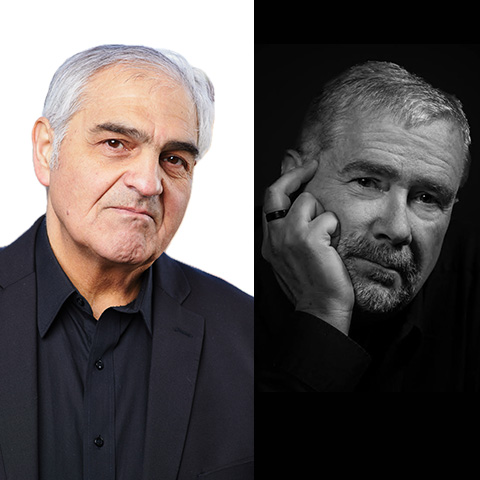
David Small, baritone, and Michael Strauss, piano, perform Schubert’s Winterreise.
Program Information
Repertoire
FRANZ SCHUBERT: Winterreise, D. 911 (Poetry of Wilhelm Müller)
1. Gute Nacht (Good Night)
2. Die Wetterfahne (The Weather Vane)
3. Gefrorne Tränen (Frozen Tears)
4. Erstarrung (Frozen / Numbness)
5. Der Lindenbaum (The Linden Tree)
6. Wasserflut (Flood / Torrent)
7. Auf dem Flusse (On the River)
8. Rückblick (Looking Back)
9. Irrlicht (Will-o'-the-Wisp)
10. Rast (Rest)
11. Frühlingstraum (Dream of Spring)
12. Einsamkeit (Loneliness)
13. Die Post (The Post)
14. Der greise Kopf (The Hoary Head)
15. Die Krähe (The Crow)
16. Letzte Hoffnung (Last Hope)
17. Im Dorfe (In the Village)
18. Der stürmische Morgen (The Stormy Morning)
19. Täuschung (Illusion / Deception)
20. Der Wegweiser (The Signpost)
21. Das Wirtshaus (The Inn)
22. Mut! (Courage!)
23. Die Nebensonnen (The Mock Suns)
24. Der Leiermann (The Organ Grinder)
Performed without intermission (approx. 75 minutes)
1. Gute Nacht (Good Night)
2. Die Wetterfahne (The Weather Vane)
3. Gefrorne Tränen (Frozen Tears)
4. Erstarrung (Frozen / Numbness)
5. Der Lindenbaum (The Linden Tree)
6. Wasserflut (Flood / Torrent)
7. Auf dem Flusse (On the River)
8. Rückblick (Looking Back)
9. Irrlicht (Will-o'-the-Wisp)
10. Rast (Rest)
11. Frühlingstraum (Dream of Spring)
12. Einsamkeit (Loneliness)
13. Die Post (The Post)
14. Der greise Kopf (The Hoary Head)
15. Die Krähe (The Crow)
16. Letzte Hoffnung (Last Hope)
17. Im Dorfe (In the Village)
18. Der stürmische Morgen (The Stormy Morning)
19. Täuschung (Illusion / Deception)
20. Der Wegweiser (The Signpost)
21. Das Wirtshaus (The Inn)
22. Mut! (Courage!)
23. Die Nebensonnen (The Mock Suns)
24. Der Leiermann (The Organ Grinder)
Performed without intermission (approx. 75 minutes)
Welcome
Welcome to this epic winter journey! Schubert’s Winterreise is approximately 75 minutes long and will be performed without intermission.
Those of you attending in person will not need a translation sheet because we will be projecting translations and photography during the performance. Knowing those are hard or impossible to read if one is live streaming, here is a link to terrific translations through the Thomas Hampson’s Song Foundation.
Those of you attending in person will not need a translation sheet because we will be projecting translations and photography during the performance. Knowing those are hard or impossible to read if one is live streaming, here is a link to terrific translations through the Thomas Hampson’s Song Foundation.
Program Notes
I think I started learning Schubert’s monumental work Winterreise at least half a dozen times in my 20s and 30s. Each time I would start from the beginning and get about four or five songs in and give up. It was too dark. It was too depressing. I was spending most of my career singing fun, joyful opera roles like Figaro in The Barber of Seville or Eisenstein in Fledermaus or Papageno—the funny, happy dudes. Over an hour of what seemed to be deeply depressing poetry and music was more than I could stand. So I would give up, only to start “climbing Everest” again a year or so later … only to come to the same conclusion: I’m too happy a guy for this.
Then in 2009 I decided to take a different tack. I would give myself a full year to learn the work. And, most significantly, I disciplined myself to fully and deeply learn the last (second) verse of the last song first, then the first verse of the last song, then the last verse of the penultimate song, etc., etc., etc., until the work was prepared. That turned out to make all the difference.
Learning the poems and songs from the back to the front not only made it easier to learn (for reasons I won’t go into here) but it showed me that the work itself is not the depressing, hopeless wallowing in German existential angst I had thought, and been taught, it was. Starting at the end introduced me to poems of defiance (“Mut!”), poems of courage (“Wirtshaus”)—and ultimately that the work, to me, is about an “outsider” and “other” who is constantly questioning why he is the way he is—why life is the way it is. In Schubert’s setting of 24 poems, there are 47 question marks. I counted them.
In my opinion, it is the story of this person coming to terms with himself as his genuine self, outside the norms and expectations of society. It is the story of a person who is destroyed—rather, nearly destroyed—by the anguish of romantic rejection, by the brutality of basic human existence, by the specter, the inexorable approach of death. And yet, through all this, finds acceptance of himself, finds a like spirit, and, as we humans do, comes to terms with life.
It has been an indescribably enlightening and beautiful experience to prepare this work with Michael Strauss, who, you will hear, brings wisdom and a depth of beauty to each of these songs that leaves me simply and deeply grateful.
We are thrilled to share this searching, wrestling, courageous, defiant, and monumentally, heroically beautiful work with you!!!
—David Small, February 8, 2026
Then in 2009 I decided to take a different tack. I would give myself a full year to learn the work. And, most significantly, I disciplined myself to fully and deeply learn the last (second) verse of the last song first, then the first verse of the last song, then the last verse of the penultimate song, etc., etc., etc., until the work was prepared. That turned out to make all the difference.
Learning the poems and songs from the back to the front not only made it easier to learn (for reasons I won’t go into here) but it showed me that the work itself is not the depressing, hopeless wallowing in German existential angst I had thought, and been taught, it was. Starting at the end introduced me to poems of defiance (“Mut!”), poems of courage (“Wirtshaus”)—and ultimately that the work, to me, is about an “outsider” and “other” who is constantly questioning why he is the way he is—why life is the way it is. In Schubert’s setting of 24 poems, there are 47 question marks. I counted them.
In my opinion, it is the story of this person coming to terms with himself as his genuine self, outside the norms and expectations of society. It is the story of a person who is destroyed—rather, nearly destroyed—by the anguish of romantic rejection, by the brutality of basic human existence, by the specter, the inexorable approach of death. And yet, through all this, finds acceptance of himself, finds a like spirit, and, as we humans do, comes to terms with life.
It has been an indescribably enlightening and beautiful experience to prepare this work with Michael Strauss, who, you will hear, brings wisdom and a depth of beauty to each of these songs that leaves me simply and deeply grateful.
We are thrilled to share this searching, wrestling, courageous, defiant, and monumentally, heroically beautiful work with you!!!
—David Small, February 8, 2026
About the Artist
David Small, baritone, continues to enjoy a vibrant career in opera and concert, having performed over 70 different roles in nearly 60 operas, including Rigoletto, Tosca (Scarpia), Traviata (Germont), Bohème (Marcello), and Il barbiere di Siviglia (Figaro, which he performed well over 100 times). He has been featured as soloist with the Cincinnati May Festival Orchestra, Austin Symphony, St. Louis Symphony, Rochester Philharmonic, and Fort Wayne Philharmonic in works such as Elijah, Vaughan Williams’ Dona Nobis Pacem, Brahms’s Ein Deutsches Requiem, Bloch’s Sacred Service, and Szymanowski’s Stabat Mater. Small has collaborated with conductors James Conlon, Anton Coppola, Peter Bay, Valery Ryvkin, Victor DeRenzi, Dr. Robert Larsen, and many others. An avid recitalist, he has performed recitals with Anton Nel, Jean Anderson, Joachim Reinhuber, Steve Wogaman, John Novacek, and Eugene Cline, and has sung Schubert’s complete Winterreise 13 times (and counting).
Small retired from the University of Texas at Austin and moved to Boston in 2020. He was invited to join the voice faculty of Boston Conservatory at Berklee in 2021, where he teaches singing, performance seminars, and a course he designed called The Mindful Performer. In 2011, he was selected as one of four NATS Master Teachers, and his students have been finalists in the Metropolitan Opera National auditions and the International Verdi Baritone Competition, among others. He earned a Bachelor of Music in voice performance from DePauw University’s School of Music while studying with Thomas Fitzpatrick (protégé of American baritone, Mack Harrell) and earned an Artist Diploma in opera and an Master of Music in voice performance from the University of Cincinnati’s College-Conservatory of Music, under the tutelage of the great Italian basso Italo Tajo.
Michael Strauss, piano, is a native of Cape Town, South Africa where he studied under Laura Searle and Thomas Rajna at the University of Cape Town, and began his teaching career at the University of the Witwatersrand in Johannesburg, where he taught piano and chamber music and was the head vocal coach and chorus master of the Opera Department. As a performer, Strauss was associated with the South African Broadcasting Company, where he was frequently a soloist and accompanist on radio and television. He has also been the featured concerto soloist with the main orchestras of the country, including performances of Liszt’s Piano Concerto No. 1 with the Cape Town Performing Arts Board (CAPAB), Rachmaninoff’s Paganini Variations with the Cape Town Symphony Orchestra, and Gershwin’s I Got Rhythm Variations with the South African Broadcasting Company Symphony Orchestra.
Strauss has resided for the past 37 years in Boston, where he has taught for several performing arts institutions and is a very active and highly sought coach and accompanist. Now retired, Strauss was an opera coach and lecturer with the Opera Department at New England Conservatory from 2001 to 2022, and a professor on the vocal arts faculty of Boston Conservatory at Berklee from 1992 to 2022, which included a tenure from 1992 to 2001 as music director for the Conservatory’s opera department. Outside of his conservatory work, he has been heard in recital at various Boston venues including Jordan Hall, the Museum of Fine Arts, and the French Library, as well as in New York at the Weill Recital Hall in Carnegie Hall. He has been the principal pianist with Boston Music Theater, which has performed in Cambridge's Regatta Bar, and frequently toured Europe, including concerts at the embassies in Brussels, Paris, and in Russia at both the Spaso House and Rachmaninoff Hall. He has recorded chamber music for WGBH.
As a conductor, Strauss has led the New England premier of Bizet’s Pearl Fishers, Die Entfürung aus dem Serail at Boston University’s Tsai Center, and The Dialogues of the Carmelites with Boston Opera Collaborative. From 2011 to 2017, Strauss was the music director of the International Performing Arts Institute in Bavaria, Germany.
Small retired from the University of Texas at Austin and moved to Boston in 2020. He was invited to join the voice faculty of Boston Conservatory at Berklee in 2021, where he teaches singing, performance seminars, and a course he designed called The Mindful Performer. In 2011, he was selected as one of four NATS Master Teachers, and his students have been finalists in the Metropolitan Opera National auditions and the International Verdi Baritone Competition, among others. He earned a Bachelor of Music in voice performance from DePauw University’s School of Music while studying with Thomas Fitzpatrick (protégé of American baritone, Mack Harrell) and earned an Artist Diploma in opera and an Master of Music in voice performance from the University of Cincinnati’s College-Conservatory of Music, under the tutelage of the great Italian basso Italo Tajo.
Michael Strauss, piano, is a native of Cape Town, South Africa where he studied under Laura Searle and Thomas Rajna at the University of Cape Town, and began his teaching career at the University of the Witwatersrand in Johannesburg, where he taught piano and chamber music and was the head vocal coach and chorus master of the Opera Department. As a performer, Strauss was associated with the South African Broadcasting Company, where he was frequently a soloist and accompanist on radio and television. He has also been the featured concerto soloist with the main orchestras of the country, including performances of Liszt’s Piano Concerto No. 1 with the Cape Town Performing Arts Board (CAPAB), Rachmaninoff’s Paganini Variations with the Cape Town Symphony Orchestra, and Gershwin’s I Got Rhythm Variations with the South African Broadcasting Company Symphony Orchestra.
Strauss has resided for the past 37 years in Boston, where he has taught for several performing arts institutions and is a very active and highly sought coach and accompanist. Now retired, Strauss was an opera coach and lecturer with the Opera Department at New England Conservatory from 2001 to 2022, and a professor on the vocal arts faculty of Boston Conservatory at Berklee from 1992 to 2022, which included a tenure from 1992 to 2001 as music director for the Conservatory’s opera department. Outside of his conservatory work, he has been heard in recital at various Boston venues including Jordan Hall, the Museum of Fine Arts, and the French Library, as well as in New York at the Weill Recital Hall in Carnegie Hall. He has been the principal pianist with Boston Music Theater, which has performed in Cambridge's Regatta Bar, and frequently toured Europe, including concerts at the embassies in Brussels, Paris, and in Russia at both the Spaso House and Rachmaninoff Hall. He has recorded chamber music for WGBH.
As a conductor, Strauss has led the New England premier of Bizet’s Pearl Fishers, Die Entfürung aus dem Serail at Boston University’s Tsai Center, and The Dialogues of the Carmelites with Boston Opera Collaborative. From 2011 to 2017, Strauss was the music director of the International Performing Arts Institute in Bavaria, Germany.
Ensemble
David Small, baritone
Michael Strauss, piano
Michael Strauss, piano
Concert Services Staff
Assistant Director, Concert Services – Luis Herrera
Coordinator, Concert Services – Matthew Carey
Concert Production Manager – Kendall Floyd
Performance Technology Technicians – Sara Pagiaro, Goran Daskalov
Coordinator, Concert Services – Matthew Carey
Concert Production Manager – Kendall Floyd
Performance Technology Technicians – Sara Pagiaro, Goran Daskalov
Boston Conservatory thanks audience members for viewing this program information online. This paperless program saved 130 sheets of paper, 14 gallons of water, and 12 pounds of CO2-equivalent greenhouse gas emissions.
Related Categories:
Faculty Performances
Music
Share To: